Route Selection Summary
- Private label is usually the fastest route for launch and testing.
- ODM is useful when you want guided differentiation without pretending the project is unlimited custom work.
- OEM is usually the stronger fit when your direction is clearer and control matters more.
- The right route depends on scope, branding, quantity, and timing, not only on terminology.
Many buyers use the words OEM, ODM, and private label as if they mean the same thing. In sunglasses sourcing, they do not. They may overlap in some projects, but they do not carry the same level of customization, development workload, MOQ logic, or quotation process.
This matters because the route you choose affects almost everything that comes after:
- how much customization is realistic
- what information the supplier needs before quoting
- how sample development should be reviewed
- what MOQ range makes sense
- how fast you can move
- how much risk sits inside the first order
If you choose the wrong route, you can end up comparing suppliers on the wrong basis. A buyer asking for OEM pricing while actually planning a private label test order usually creates confusion. A buyer asking for “private label” while expecting new structure development often ends up disappointed by timing, MOQ, or feasibility.
If you are working with a custom sunglasses manufacturer, the first step is not to ask for a quote. The first step is to define which route actually fits your project.
Quick Answer: What Is the Difference?
Here is the shortest practical distinction:
| Route | Practical meaning | Best fit | Main commercial tradeoff |
|---|---|---|---|
| OEM | You want controlled customization based on a clear product direction | Brands and buyers with clearer design or technical requirements | Higher development involvement |
| ODM | You want development support built on supplier capability and existing product logic | Buyers who want a stronger product identity without starting from zero | Customization is real, but not unlimited |
| Eigenmarke | You want to move faster with ready models plus logo and packaging | Startups, test launches, wholesalers, and importers validating demand | Lower uniqueness than deeper development |
That table is useful as a starting point, but it is still too simple for a real sourcing decision. The deeper question is not only “what do these words mean?” It is “what changes in MOQ, lead time, sample process, and execution risk when I choose one route over the others?”
Why Buyers Often Confuse These Three Routes
The confusion usually comes from three patterns:
- Suppliers use the terms too loosely in marketing copy.
- Buyers describe the commercial goal, but not the development scope.
- Projects evolve during quotation, so the original label stops matching the real work.
For example:
- a buyer may ask for private label sunglasses, then later request material changes, new decoration details, and special packaging
- a buyer may ask for OEM, but the project may actually be closer to adapting a supplier-supported existing model
- a buyer may ask for ODM, but what they really need is a faster private label launch with branded packaging
That is why a good manufacturer will usually ask more questions before it commits to MOQ, sample timing, and bulk terms.
What OEM Means in Custom Sunglasses
In practical sunglasses sourcing, OEM usually means the buyer has a clearer target direction and wants more controlled customization on the product, branding, or both.
That can include:
- specific frame direction
- custom lens requirements
- logo application choices
- packaging coordination
- finish or detail adjustments
- stronger control over the final market-facing result
OEM does not always mean starting from a completely blank sheet of paper. But it usually means the project requires more technical review than a simple ready-model private label order.
OEM is usually a stronger fit when:
- you already know the target look and positioning
- your project needs more than logo-only changes
- you care about product differentiation
- you can provide clearer commercial inputs before quotation
OEM review checklist
| Buyer question | Why it matters in OEM projects |
|---|---|
| Which frame details are fixed and which can change? | Defines real customization scope |
| What is the target quantity by model and color? | Affects MOQ and cost structure |
| What lens type is needed? | Changes sample and production planning |
| What logo method is required? | Impacts tooling, placement, and finishing |
| What packaging is part of the order? | Prevents incomplete quotations |
OEM works best when the buyer has a clear commercial direction and enough detail to let the manufacturer judge feasibility early.
What ODM Means in Custom Sunglasses
ODM is often misunderstood as “almost anything custom, but easier.” In reality, ODM usually works best when the manufacturer can support development through an existing capability base, product logic, or design-development path.
In practical terms, ODM sunglasses projects are often appropriate when:
- the buyer wants a more distinctive result than ready-model private label
- the project still benefits from supplier-supported development logic
- the buyer wants design guidance without managing every technical detail alone
ODM can be a good middle path between speed and differentiation, but it is not a magic shortcut. Buyers still need to be realistic about:
- MOQ
- sample rounds
- changes in materials or details
- timeline shifts when the project becomes more complex
ODM is usually a stronger fit when:
- you want a more customized project, but not a fully open-ended one
- you want the supplier to contribute more development guidance
- you need a route between generic stock and deeper OEM-style control
OEM vs ODM in practical decision terms
| Decision point | OEM tendency | ODM tendency |
|---|---|---|
| Buyer control | Higher | Shared more with supplier capability |
| Development clarity needed before quote | Higher | Still important, but supplier guidance can be stronger |
| Risk of unrealistic expectations | Buyers underestimate scope | Buyers overestimate flexibility |
| Best fit | Clearer technical/product direction | Stronger need for guided development |
ODM should feel like a guided decision path, not like a vague promise that anything can be customized cheaply and quickly.
What Private Label Means in Practical Order Terms
Private label sunglasses projects are usually the fastest route for buyers who want to test a market, launch a collection earlier, or move with less development friction.
In most cases, private label means:
- using ready or near-ready models
- applying brand identity through logo and packaging
- reducing development complexity
- keeping the project commercially lighter than deeper OEM or ODM work
Private label is especially useful when the buyer wants to validate demand before investing more deeply in custom development.
Private label usually works best when:
- you are launching a new brand
- you want to test styles before deeper development
- you need faster movement than a custom project allows
- logo and presentation matter more than structural uniqueness in the first order
Typical private label strengths
| Strength | Why buyers choose it |
|---|---|
| Faster launch | Less product-development burden |
| Lower complexity | Easier to align logo + packaging first |
| Easier testing | Useful for new collections or first market entry |
| Better for validation | Helps buyers learn before scaling customization |
Private label is not “worse” than OEM or ODM. It is simply a different route with a different job to do.
Which Route Fits Different Types of Buyers?
The right answer often depends on the buyer profile more than the factory profile.
| Buyer type | Usually strongest first route | Reason |
|---|---|---|
| Startup brand | Private label, then OEM later | Faster validation with lower development burden |
| Established brand | OEM or ODM | Stronger need for positioning and differentiation |
| Wholesaler | Private label or selected OEM | Speed and assortment often matter more than deep development |
| Distributor | Private label or OEM | Depends on market control and buyer expectations |
| Importer testing a new market | Eigenmarke | Lower entry friction |
| Buyer with strong product direction | OEM | Better fit for controlled customization |
If the project is still learning what the market wants, private label often makes sense first. If the project already knows the product direction and brand requirements clearly, OEM or ODM may be more appropriate.
MOQ, Sample Time, and Development Complexity by Route
This is where route selection becomes commercially real.
At Joysee, the current public reference ranges on the sunglasses manufacturer page are:
| Condition | Current public reference |
|---|---|
| Stock wholesale MOQ | 12 pcs/color |
| Custom production MOQ | 300-600 pcs/model |
| Sample lead time | 5-30 days |
| Mass production lead time | 15-60 days |
These are reference ranges, not fixed promises for every project. The final scope still depends on style, materials, quantity, logo method, lens requirements, and packaging.
Route comparison table
| Route | MOQ tendency | Sample tendency | Development complexity | Commercial comment |
|---|---|---|---|---|
| Eigenmarke | Usually closer to stock-based flexibility | Usually simpler | Lower | Good for testing, launch speed, and branded ready models |
| ODM | Moderate to higher depending on supplier path | More review than private label | Medium | Good when you want guided product differentiation |
| OEM | Often strongest customization-driven MOQ logic | Depends heavily on scope | Higher | Best when product direction is clearer and control matters more |
If a supplier gives exactly the same MOQ and timing logic for all three routes, that usually means the commercial model has not been reviewed carefully enough.
Materials and Branding Can Change the Route Faster Than Buyers Expect
Many projects start as “private label” and then move closer to OEM or ODM once the buyer begins adding:
- material changes
- custom lens requirements
- special finish or decoration
- non-standard logo placement
- more complex packaging
That does not mean the project is wrong. It simply means the route needs to be redefined honestly.
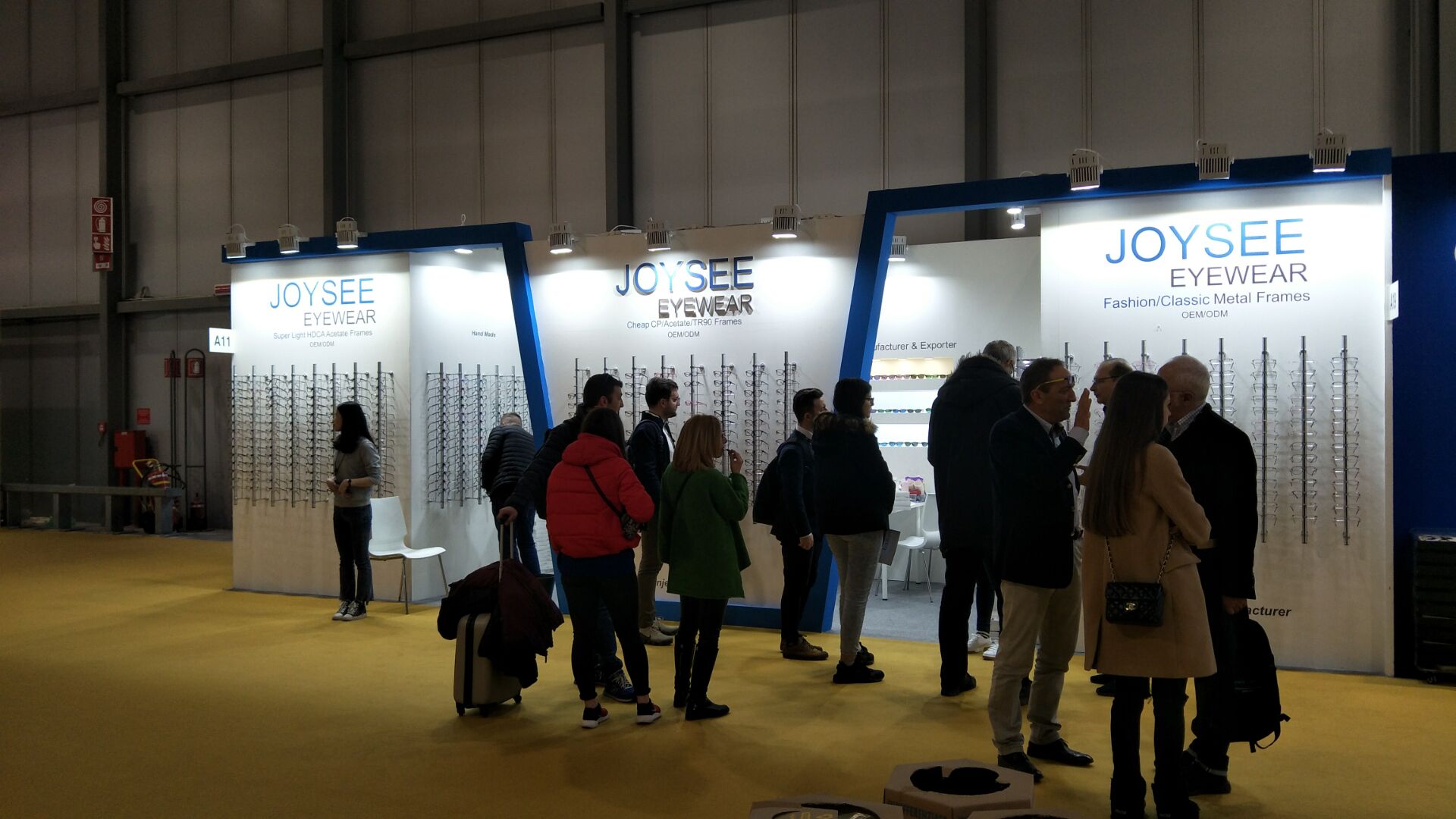
At Joysee, the current public material scope for sunglasses includes:
- Acetat
- Metall
- TR90
- Titan
- Holz
Each material can affect:
- MOQ
- sample timing
- finishing difficulty
- branding options
- production timing
Material and branding review table
| Project element | Why it can change the route |
|---|---|
| New material direction | Can increase feasibility review and sample complexity |
| Special logo method | May affect tooling or finishing expectations |
| Non-standard lens request | Changes technical scope |
| Customized packaging set | Adds coordination and timeline layers |
| Multi-part brand presentation | Makes “simple private label” less simple in practice |
The route label should follow the real workload, not just the original sales request.
What a Manufacturer Needs Before It Can Recommend the Right Route
A good manufacturer should help decide the route, but only if the buyer gives enough inputs.
Before the manufacturer can meaningfully say “this is better as OEM” or “this is better as private label,” these points can help if you already have them. You do not need a complete brief before the discussion starts:
- reference images
- target quantity
- target market
- material preference
- lens requirements
- logo method
- packaging scope
- expected timeline
Helpful inputs for route review
| Input | Why the manufacturer needs it |
|---|---|
| Reference image or style direction | Defines whether the project is generic or controlled |
| Quantity | Helps determine MOQ logic |
| Markt | Affects commercial and compliance discussion |
| Material preference | Changes feasibility and timeline |
| Lens requirements | Changes technical path |
| Logo method | Affects development and finishing logic |
| Packaging needs | Changes complexity and delivery planning |
| Launch timing | Helps decide whether the route is realistic |
If you want a cleaner answer from the factory, give a cleaner project frame.
Common Route-Selection Mistakes
The biggest problems usually come from mislabeled projects.
Common mistakes
| Irrtum | What usually happens next |
|---|---|
| Calling a complex custom project “private label” | The first quote is too shallow, then changes later |
| Asking for OEM without clear project inputs | The manufacturer cannot define realistic terms |
| Assuming ODM means unlimited low-cost customization | Expectations outrun supplier capability |
| Treating logo and packaging as small details | Timing and MOQ become unstable later |
| Comparing routes only by price | You ignore development burden and execution risk |
The best route is not the one with the cheapest first answer. It is the one that matches your actual project load.
A Practical Fit Guide for Joysee
No route is “best” for everyone. What matters is fit.
Joysee may be a good fit for private label when:
- you want to move faster with ready-model based development
- you need logo and packaging coordination
- you want to test a market before deeper customization
Joysee may be a good fit for OEM when:
- you have clearer product direction
- you need stronger control over branding, materials, or configuration
- you can provide enough project detail for a practical review
Joysee may be a good fit for ODM when:
- you want supplier-supported development beyond simple private label
- you want more differentiation without treating the project as an unlimited custom brief
If you still are not sure which route is right, the most practical starting point is to compare the project logic against a custom sunglasses manufacturer, review our Kontaktieren Sie Joysee Eyewear | OEM/ODM-Anfrage - Joysee Eyewear | Hersteller maßgefertigter Brillen, and then send your inquiry to Joysee for direct route review and factory feedback.
Final Takeaway
OEM, ODM, and private label sunglasses are not just different words. They are different commercial routes.
Private label is usually the fastest path for testing and launch. ODM can be a strong middle route when you want more guided product differentiation. OEM is usually the best fit when your project direction is clearer and you need stronger control over the final result.
The right decision is not the one that sounds the most advanced. It is the one that matches your quantity, market, timeline, branding scope, and development reality.
If you want direct route feedback before pricing, start with our how to choose a sunglasses manufacturer guide, review the MOQ and lead time ranges on our sunglasses manufacturer page, or send your inquiry to Joysee to discuss whether your order is better handled as OEM, ODM, or private label.
Suggested FAQ block for this post
Which is faster: OEM, ODM, or private label sunglasses?
Private label is usually the fastest route because it is often based on ready or near-ready models with logo and packaging coordination. OEM and ODM usually need more review depending on the level of customization.
Is private label always lower MOQ than OEM?
Not always, but private label projects are often closer to stock-based flexibility. At Joysee, current public reference ranges include stock wholesale from 12 pcs/color and custom production usually around 300-600 pcs/model, depending on project scope.
Is ODM the same as using a ready model?
Not exactly. ODM usually involves supplier-supported development logic beyond a simple ready-model private label order, but it does not mean unlimited customization.
What should I send before asking which route is right?
You can send any information you already have. Joysee can review the project logic with you and help determine whether OEM, ODM, or private label is the most practical route.




 German
  English
  Italian
  Spanish
  Portuguese
  Polish
  French