
1. Introduction: Comparing Sunglasses Manufacturing Partners
Choosing a sunglasses manufacturer starts with a clear project brief and evidence for the product you want to order. Use this guide to compare production scope, materials, customization, quality records and project examples. Define your target market, intended use, frame and lens requirements, quantities and launch timing before comparing suppliers.
2. Review Production Scope and Scheduling
Ask which operations are needed for your selected frame material and design, where those operations take place, and who is responsible for them. If a proposal refers to CNC machining, hinge drilling, rolling, ovens or engraving equipment, ask the supplier to explain its role in the proposed production route and provide relevant supporting records.
For a larger or time-sensitive order, request a project schedule rather than relying on a general claim about capacity. Ask what must be confirmed before sampling or production can begin, which stages depend on other suppliers, and how changes to the design or order quantity affect the plan.
Equipment Relevant to Your Selected Product
Review equipment and process information against the particular model, material and finish being quoted. Ask which work is performed at the named facility and which work involves another supplier. A list of machines alone should not replace a clear explanation of responsibility for the finished product.
Finishing and Branding Processes
If your design calls for laser engraving, hot stamping or a sculpted detail, ask whether the method is suitable for the selected material and location. Request a sample of the proposed finish and confirm its appearance, placement, cost and production conditions before treating it as an agreed specification.
Questions About Production Planning
Ask the supplier to identify the planned sampling, review, production, inspection and dispatch stages. Record the assumptions behind the schedule and the person responsible for reporting changes. Request relevant project records before relying on claims about large orders or delivery performance.

3. Define the Product Category and Specifications
Describe whether your brief is for luxury, sports-style, fashion or classic sunglasses, then turn that description into requirements that can be checked on a sample. Include the frame shape, dimensions, intended fit, material, color, finish, lens configuration and packaging.
Ask the supplier to confirm the options for the selected model instead of assuming that every material, finish or lens feature shown in a catalog is available together. Record the agreed configuration and request the documents needed to evaluate any performance claim.
Product Brief by Category
Use the following categories to organize questions for a supplier. These are specification prompts, not confirmation that a particular supplier offers every listed option.
Luxury Sunglasses
Specify the desired frame material, source requirements, detailing and finish. If Italian acetate, a particular metal grade or a hand-finished detail is important to your brief, ask for matching material information and a sample before approving that description for your own marketing.
Sports-style Sunglasses
Define the intended use, fit, weight and lens requirements. If you want TR90, polarization, an anti-reflective coating or an impact-related claim, ask the supplier to confirm the selected configuration and provide the applicable evidence. Review these requirements separately from the visual style.
Fashion and Trendy Sunglasses
Share reference shapes, colors and finishes, then identify which details are essential and which can change. Ask to review the proposed proportions, logo placement and finish on a sample rather than relying only on a trend description or product rendering.
Classic Sunglasses
For aviator, round or other classic shapes, specify dimensions, fit, hinge details and lens options. Compare samples against the same written requirements so that differences in material, construction or finish are visible during supplier evaluation.
Requirements for Your Target Market
State the destination market and intended customer use in the brief. Ask which size, lens, labeling, packaging and documentation requirements need review for the selected product. Do not use a supplier’s general market experience as a substitute for checking your actual configuration.
4. Prepare a Customization Brief
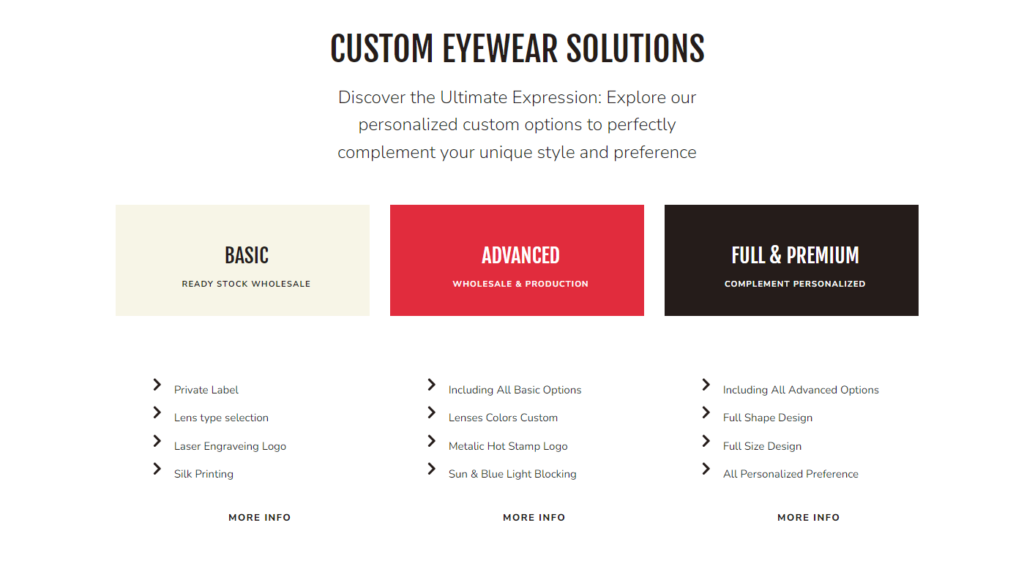
A useful customization brief can include a physical sample, product photos, sketches or a written description. Specify the features you want to retain or change, the expected quantities, target market, frame and lens preferences, logo artwork and packaging requirements.
Ask the supplier to separate options that are already available for a selected model from changes that require further design, tooling or sampling review. Confirm the proposed work, charges, timing and unresolved questions before relying on a quotation or launch date.
Review the Proposed OEM/ODM Scope
Confirm What the Proposal Includes
For an OEM or ODM proposal, ask which design, product, branding and packaging tasks are included and who is responsible for each deliverable. Confirm the applicable order conditions and any limits on materials or methods for your specific project.
Record the Design and Sample Review
Keep the product references, drawings, artwork and written requirements together. Mark the version under discussion, the requested changes, the open questions and the person responsible for confirming them.
Before moving to another project stage, agree which sample or specification version is being reviewed and how changes will be recorded. Ask the supplier to confirm the actual production starting conditions and schedule for the selected route.
Check Branding Options on the Selected Material
If you want silk screening, laser engraving, heat transfer, a metal sticker or a tag, ask which method is available and suitable for the chosen frame. Confirm artwork, location, dimensions, finish and any separate sampling or order conditions.
Questions for a Custom Project Review
Before approving the proposal, check that the product configuration, artwork version, sample feedback, packaging, quantities and outstanding decisions are recorded consistently. Ask how a later change would affect the quotation, sample review and production plan.

5. Check Quality Records and Document Scope
Define the quality requirements for the selected product before comparing inspection claims. Ask which checks are proposed for materials, lenses, frame fit, assembly, appearance, packaging and shipment review, and what records will be available for the order.
Review supporting documents by holder, product, configuration, market, date and scope. A factory-level document or a general company statement should not be treated as evidence that every model or shipment meets every requirement.
Match Checks to the Agreed Specification
Ask how the proposed checks relate to your approved dimensions, materials, lens configuration, logo, finish and packaging. Record the acceptance criteria and the information needed to investigate an issue rather than relying on a general promise of the highest quality.
Quality Review Questions
Request the inspection plan and ask which material, in-process and final checks apply to your order. Clarify who performs them and how results, photos, batch details and unresolved issues will be recorded.
Before dispatch, review the agreed product and packaging requirements against the available inspection records. Confirm how any nonconformity will be reported and handled under the actual order agreement.
Read Certification References Carefully
When a supplier refers to CE, UKCA, FDA registration or BSCI, ask what each document covers and check the holder, product scope, date and relevant market. Keep FDA registration distinct from FDA product approval. Do not treat registration, an audit or a document for a different product as blanket proof for the selected sunglasses.
Check Evidence for Sustainability Claims
If a produttore di occhiali da sole proposes an environmental or material-sourcing claim, request the evidence for the selected material and product. Confirm what can be stated about that configuration before using the claim in your own product descriptions.

6. Assess Supplier Project Examples
Ask for a relevant project example when you need to understand how a supplier handles a brief similar to yours. Look for the product and route, the original requirement, the work performed, the issue addressed and the records supporting the result.
A named brand, a positive comment or a general success story should not replace those details. If an example is confidential, ask which process information can be shared without identifying the customer or disclosing protected material.
Use the questions below to review project examples. They are buyer evaluation prompts, not reports of completed Joysee customer projects or promised sales results.
What Makes a Project Example Useful?
Check the date, product configuration, scope of work and evidence for the stated outcome. Distinguish the supplier’s documented actions from the customer’s later sales or brand performance, and confirm permission before reusing a customer quote or identifying information.
Fashion Brand Project Questions
Ask how the brand’s reference designs became a specification, which changes were reviewed during sampling, and what records show the final agreed configuration. If sales growth or market impact is claimed, request separate evidence for that result.
Creator-led Brand Project Questions
Ask which initial quantities, branding methods and packaging requirements were agreed. Check what would need to be reviewed again for a repeat order or a larger quantity instead of assuming that a small first order establishes future capacity or terms.
Established Eyewear Brand Project Questions
Ask how the supplier handled specification versions, sample feedback, inspection requirements and changes during the project. Look for relevant records rather than treating a brand name or an unsupported satisfaction claim as proof.
Compare project evidence with your own requirements. Keep unverified outcomes separate from the information you use to approve a supplier, product description or order.
7. Compare Communication and Total Project Cost
Compare suppliers using the same product brief, quantities, documentation requirements and delivery assumptions. Record what each proposal includes, what remains unconfirmed and which changes would require a new quotation.
Communication and Responsibility
Confirm a project contact, the current specification version and the decisions awaiting review. Ask how sample feedback, artwork changes, production updates and inspection questions will be recorded so that you can assess the actual working arrangement.
Quotation Scope and Price Comparison
When comparing a produttore di occhiali da sole, check the quoted model, material, lens configuration, logo, packaging, quantities and delivery terms together. Ask whether sampling, tooling, testing, freight or other charges are included. Resolve missing items before describing one offer as better value or lower cost.
8. Prepare Your Next Project Discussion
To discuss frame styles, lens options, logo methods, packaging, sampling or production planning, you can contact Joysee Eyewear. Share the selected model or design references, intended market, quantities and timing so that the project scope can be reviewed.
Explore Joysee Eyewear and prepare your project brief. Keep the required configuration, artwork and packaging information together, and identify any options or documents that still need confirmation.
Request confirmation of sample charges, applicable order quantities, quotation inclusions and timing for your project. Agree any discount or other commercial term explicitly rather than assuming that samples are free or that a first or bulk order includes a special offer.

Allen Lin
Posizione: Proprietario
Azienda: Joysee Occhiali
Telefono: allen.lin@joysee-eyewear.com
WhatsApp: +8613456050627
Sito web: www.joysee-eyewear.com



 Italian
 English
 Spanish
 Portuguese
 Polish
 French
 German