How Quality Control Works in Sunglasses Manufacturing

See how quality control works in sunglasses manufacturing, and how a real factory review helps reduce mistakes before sampling, production, and shipment.
Sunglasses Manufacturer Quality Control QC

Many buyers ask a sunglasses supplier one simple question: “How do you control quality?” The problem is that weak suppliers answer this with slogans, while real manufacturers answer it with checkpoints.

Quality control in sunglasses manufacturing is not one inspection at the end of the order. It is a chain of checks that starts before production, continues during processing and assembly, and finishes with final inspection and packing review before shipment.

That matters because most B2B order problems do not come from one dramatic factory mistake. They come from smaller consistency failures that were not caught early enough, such as color deviation, logo misalignment, hinge tightness, temple imbalance, lens appearance issues, packaging mix-ups, or carton-label mistakes.

If you are sourcing from a sunglasses manufacturer, the real question is not whether the supplier says it “has QC.” The real question is where quality is checked, what is checked, and how those checkpoints relate to your product route, material, branding scope, and shipment requirements.

At Joysee, the current public production references remain:

Item Current public reference
Stock MOQ 12 pcs/color
Custom MOQ 300-600 pcs/model
Sample lead time 5-30 days
Mass production lead time 15-60 days

Those ranges only become reliable when the factory is checking the right things at the right points. That is why quality control should be treated as part of project feasibility, not as a separate afterthought.

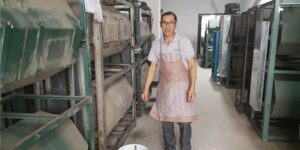
Eyewear manufacturing workshop and process control in China
Quality control starts with process discipline, not only with the final inspection table.

Quick Answer: What Should Buyers Expect From a Real QC Process?

A serious quality control process usually covers more than one stage. Buyers should expect checks before production, during production, and before packing and shipment.

QC stage What is usually checked Why buyers should care
Incoming material review Material appearance, components, lenses, logos, accessories, packaging inputs Prevents hidden mismatch from becoming a batch-level problem later
In-process production checks Shape consistency, workmanship, logo position, hinge fit, finishing, assembly accuracy Catches deviations before the full order moves too far
Final inspection Appearance, balance, cleaning, logo result, packing accuracy, quantity readiness Reduces shipment risk and protects repeat-order trust

This is also why buyers should compare quality control together with MOQ, sample time, and mass production lead time. A supplier that promises very fast delivery without explaining its checkpoints may be giving a convenient answer, not a dependable one.

Quality Control Starts Before Production Starts

One of the most common buyer mistakes is assuming quality control starts when the line starts running. In reality, many avoidable problems begin before production if materials, accessories, branding files, or packaging instructions are not aligned.

That means incoming review often includes:

  • checking whether the selected material route matches the approved project direction
  • confirming color or finish expectation against the approved reference
  • reviewing logo artwork, placement logic, and decoration method
  • checking whether lenses, hinges, screws, cases, cloths, labels, or boxes match the order scope
  • making sure the sample-approved version and the production-ready version are not drifting apart

If the project still has unresolved questions around material choice, it helps to settle them before production with a stronger custom sunglasses material guide discussion. Quality control becomes harder when the material route is still vague.

Incoming material review for custom sunglasses manufacturing
Incoming material review is one of the earliest quality-control checkpoints in custom sunglasses manufacturing.

What Is Usually Checked During Production?

During production, a real QC process is less about one dramatic inspection and more about repeated control points that prevent drift. The exact checkpoints vary by material, style, and project route, but buyers should expect the factory to monitor consistency instead of waiting until everything is finished.

Production step Typical QC focus Why it matters
Material preparation Reference match, surface condition, quantity split, part readiness Protects later production consistency
Shape / processing stage Core dimensions, edge cleanliness, structure consistency Prevents large variation across the order
Logo / decoration stage Position, clarity, adhesion, finish result Branding errors are highly visible and hard to ignore
Assembly stage Hinge action, alignment, left-right balance, component fit Protects wearer experience and functional quality
Cleaning / finishing stage Surface appearance, polishing consistency, visual cleanliness Final appearance often decides whether the batch feels premium or careless

This is one reason why buyers should not treat quality control as separate from route selection. A project handled as OEM, ODM, or private label sunglasses can create different review pressure depending on how much customization, decoration, and packaging complexity is involved.

Appearance and Branding Checks Are Part of QC Too

Some buyers treat “quality control” as if it only means defect removal. In B2B eyewear, appearance quality is often just as important as physical functionality. That includes the visual result of logos, symmetry, finish cleanliness, and how consistent the batch looks when units are checked together.

Appearance checkpoint What the manufacturer should review Buyer risk if ignored
Logo result Position, clarity, consistency, visual neatness Brand damage and buyer rejection
Surface finish Scratches, marks, polishing quality, color consistency Batch looks mixed or commercially weak
Pair symmetry Left-right consistency and visual balance Product looks wrong even before functional testing
Cleaning result Dust, residue, fingerprints, presentation quality Shipment looks careless and lowers trust immediately

For many buyers, especially brands and importers, these visual-control points are what separate a factory with real process discipline from one that only talks about capacity.

Functional Checks Before Packing

Before the order is packed, the manufacturer should not only look at appearance. Functional and handling checks are also part of the final QC logic.

Depending on the project, that often includes:

  • checking hinge opening and closing consistency
  • checking whether left and right sides feel balanced
  • checking whether components are fitted correctly
  • checking whether the product matches approved structure expectations
  • checking whether the finished item is clean enough for packing
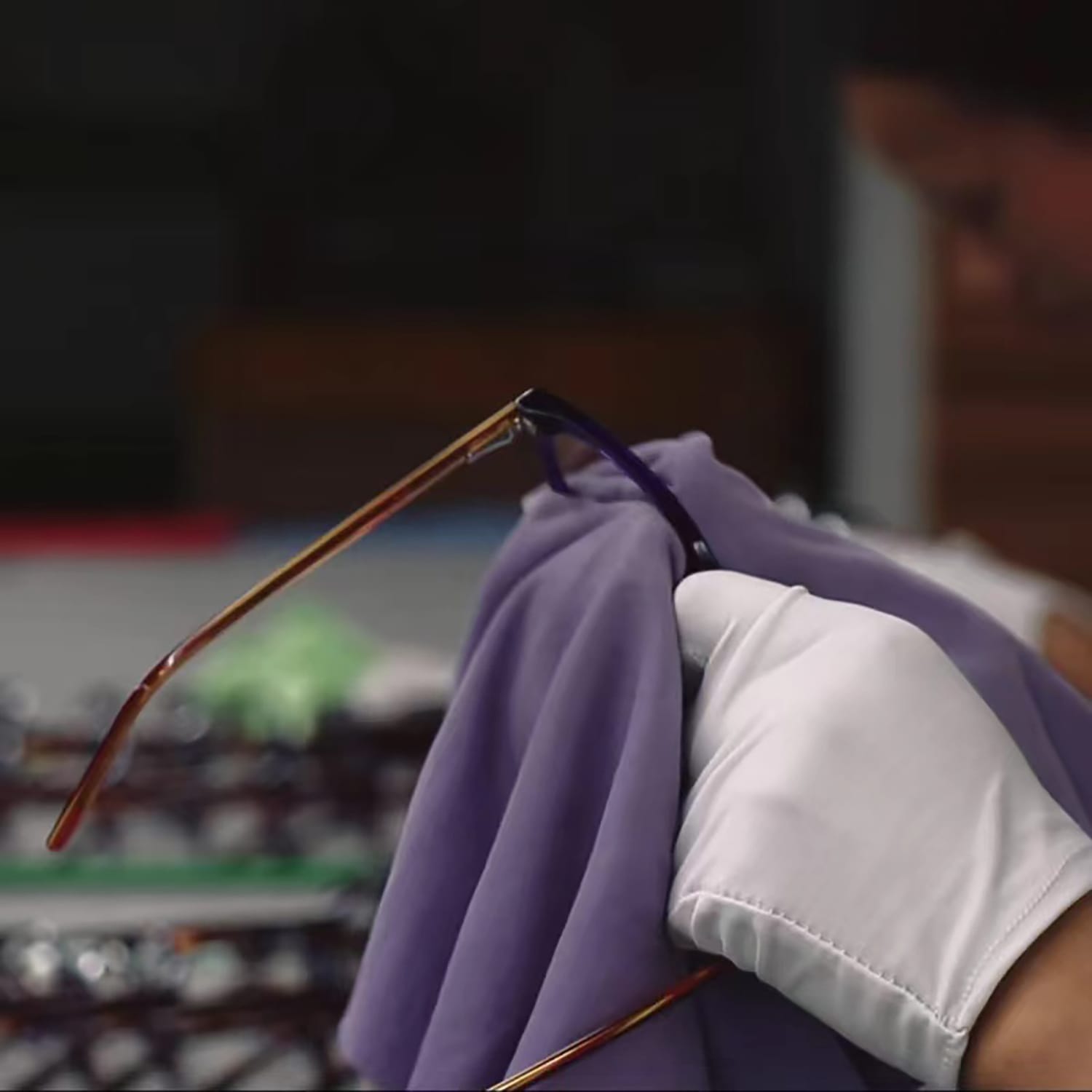
Quality control inspection for custom sunglasses before packing
Final inspection should confirm both appearance quality and functional consistency before the order is packed.

Packing Checks Are Still Quality Control

Buyers often focus so much on the product that they forget packing errors can damage the order just as easily. If the wrong case, cloth, sticker, insert, label, or carton marking is used, the shipment may still create complaints even when the sunglasses themselves are acceptable.

Packing checkpoint What should be confirmed Why it matters
Accessory match Case, cloth, labels, inserts, and boxes match the approved scope Protects order accuracy and presentation
Quantity control Model / color / carton split is correct Prevents downstream receiving problems
Packing cleanliness Products are cleaned and packed in a consistent state First customer impression depends on this
Shipment readiness Carton marking and final packing logic are aligned Reduces avoidable export and fulfillment confusion

This is why a good QC conversation should include packaging and not stop at the product itself.

What Buyers Should Ask a Manufacturer About QC

If you want to judge whether a supplier has a real process, ask specific checkpoint questions instead of a generic “Do you have QC?”

Buyer question Why it is useful
What do you check before production starts? Shows whether the factory understands incoming control, not only end-stage inspection
How do you review logo and appearance consistency? Tests whether branding quality is being treated seriously
What checkpoints happen during assembly? Reveals whether the factory is controlling process drift while the order is running
What is checked before packing and shipment? Clarifies whether final review includes both product and packing accuracy
How should buyers prepare their RFQ to reduce quality problems later? Good manufacturers usually connect QC quality with project clarity from the beginning

A factory that answers these questions clearly is usually easier to work with than one that only repeats “good quality” without operational detail. If you are already comparing multiple suppliers, this is a useful extension of a broader quality-focused supplier review.

Common Red Flags in a Weak QC Process

  • the supplier talks about quality only in general slogans
  • there is no distinction between incoming checks, in-process checks, and final inspection
  • logo quality is treated as an afterthought instead of a checkpoint
  • packing accuracy is not discussed until the order is nearly finished
  • the supplier gives very confident timing without explaining what is being checked
  • the buyer is asked to approve too little before bulk production starts

These signals do not always mean the factory is bad, but they usually mean the buyer should slow down and ask better questions before committing to bulk production.

FAQ

Is final inspection enough for a custom sunglasses order?

No. Final inspection matters, but many problems are easier and cheaper to control earlier. A reliable manufacturer should also review materials, in-process workmanship, logo execution, and packing readiness.

Does a stronger QC process make lead time longer?

Not automatically. Good quality control can actually reduce expensive rework and late-stage confusion. The better question is whether the checkpoints are planned realistically inside the production window.

How can an inquiry help reduce quality problems later?

An early inquiry gives the factory a chance to review the project before small issues turn into expensive mistakes. Joysee can help clarify the checkpoints that matter most for materials, logo, packaging, sampling, and production consistency.

Can quality control differ between OEM, ODM, and private label projects?

Yes. The more customized the project is, the more carefully appearance, logo, material, and packaging consistency should be reviewed. Different project routes create different QC pressure points.

What is the safest next step after reviewing a supplier’s QC explanation?

Move from generic discussion to a real project review. Send your inquiry to Joysee, and our team can explain the control points, likely risk areas, and next production step for your order.

Move From Generic “Good Quality” Claims to Real QC Discussion

If you are sourcing custom sunglasses, quality control should be part of your manufacturer-evaluation process from the beginning, not a last-minute checkbox before shipment.

Use it together with route selection, material choice, MOQ planning, and packaging review. The stronger the project definition is, the easier it is for the factory to control the right details at the right stage.

If you want direct factory feedback on quality checkpoints and production risks, review your project with our team through the contact page, or start from our main sunglasses manufacturer page for a broader manufacturing overview.

Share:

More Posts

Send Us A Message

en_USEnglish

Get a Factory Quote and Direct Factory Feedback

Send your inquiry now to get a factory quote, direct factory feedback, and a clearer next step for your eyewear project.
Contact Form Demo